

Live Longer, Stronger:
Science-Backed Longevity for Men
Explore the latest peer-reviewed research on male healthspan extension. Our editorial team distills complex biology into practical, evidence-based strategies that help men understand and act on the science of aging.
Why Longevity Science Matters for Men
Research consistently shows that men who actively engage with evidence-based longevity practices experience measurably better healthspan outcomes. Here are the qualitative pillars that define our editorial focus.
Cellular Precision
Our content focuses on cellular-level mechanisms — from telomere maintenance to mitochondrial efficiency — giving men a true scientific foundation.
Peer-Reviewed Basis
Every strategy featured on Agingdefybioscience is grounded in published, peer-reviewed research — no anecdote-only advice or unverified claims.
Actionable Insight
We translate dense scientific literature into clear, practical steps men in Indonesia and across Southeast Asia can realistically adopt in daily life.
Male-Specific Research
Male biology presents unique aging dynamics — from testosterone decline to cardiovascular risk profiles. Our editorial lens keeps men's specific physiology at the center.
The Biology of Male Aging — and What You Can Control
Male aging is not a single event — it is a cascade of interconnected biological processes. Testosterone levels begin a gradual decline after the age of 30, influencing muscle mass, bone density, libido, mood regulation, and even cognitive sharpness. Simultaneously, the accumulation of oxidative stress and chronic low-grade inflammation — sometimes called "inflammaging" — accelerates cellular deterioration at the molecular level.
At the cellular core, telomeres — the protective caps on chromosomes — shorten with each replication cycle. When they become critically short, cells enter senescence or die, reducing tissue regeneration capacity. Mitochondrial function also declines, impairing energy production and increasing reactive oxygen species that further damage DNA and proteins.
The encouraging reality, as revealed by decades of longevity research, is that lifestyle factors exert enormous influence over the pace of these processes. Sleep quality, nutritional composition, exercise intensity, stress management, and social connection all modulate gene expression through epigenetic pathways — meaning men have genuine, science-supported leverage over how they age.
Three Pillars of the Longevity Protocol
Leading longevity researchers converge on three foundational domains that together account for the vast majority of controllable healthspan variance in men.
Sleep Optimization
Deep sleep is not passive rest — it is the period when the brain clears metabolic waste via the glymphatic system, growth hormone is secreted, testosterone is replenished, and cellular repair mechanisms operate at peak efficiency. Research from the Walker Sleep Lab demonstrates that even moderate chronic sleep restriction accelerates biological aging markers significantly.
- Maintain consistent sleep-wake cycles even on weekends
- Prioritize 7–9 hours of uninterrupted sleep nightly
- Reduce blue light exposure 90 minutes before bed
- Keep bedroom temperature between 17–19°C for optimal REM
Nutritional Strategy
Nutritional science for longevity extends well beyond caloric restriction. Time-restricted eating, polyphenol-rich dietary patterns, adequate protein intake for muscle preservation, and targeted micronutrient sufficiency all modulate mTOR, AMPK, and sirtuins — the master regulatory proteins of cellular aging and energy metabolism.
- Prioritize whole-food protein sources (1.6–2.2g per kg body weight)
- Incorporate a daily eating window of 8–10 hours for metabolic benefit
- Emphasize anti-inflammatory foods: berries, leafy greens, fatty fish
- Limit ultra-processed food intake to reduce systemic inflammation
Strategic Movement
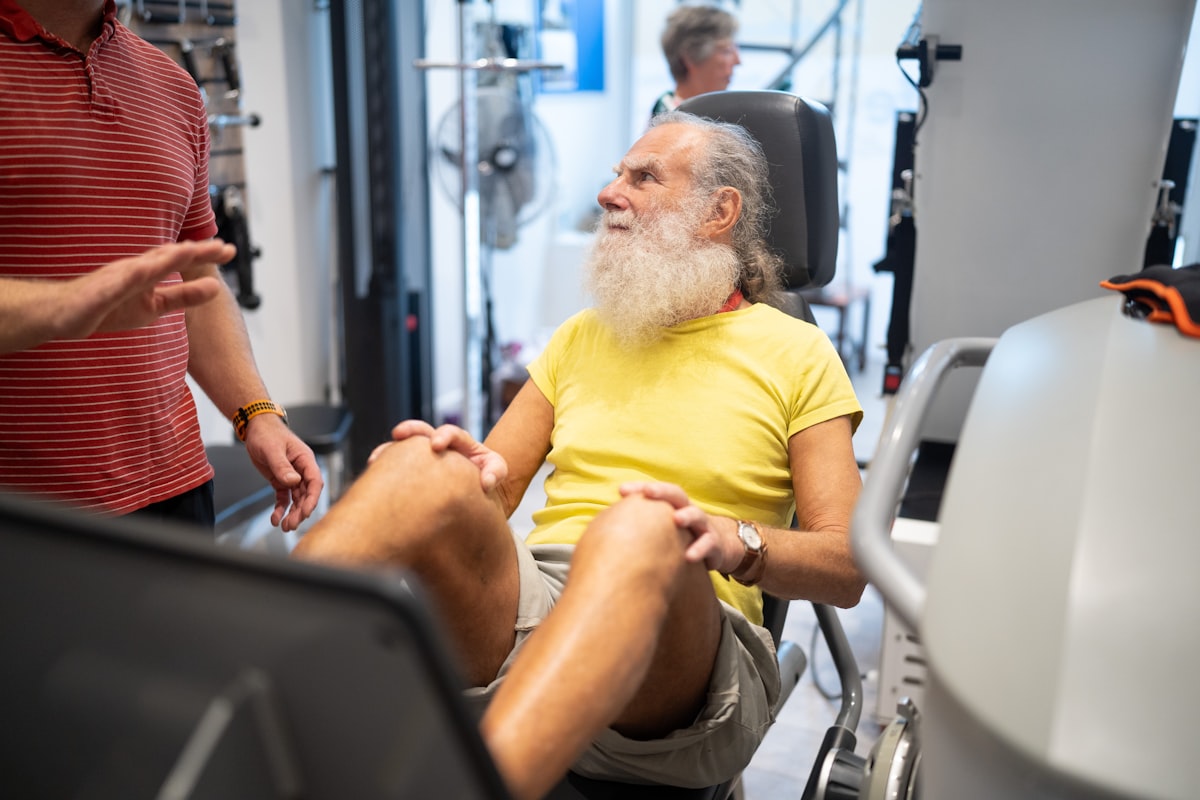
Exercise is arguably the single most potent longevity intervention available without a prescription. Resistance training preserves lean muscle mass and bone density — both critical for metabolic health and independence in later decades. Zone 2 cardiovascular training (conversational-pace aerobic work) enhances mitochondrial biogenesis, while high-intensity intervals improve VO₂ max, the strongest predictor of long-term mortality risk.
- Perform resistance training 3–4 sessions per week
- Accumulate 150–180 min weekly of Zone 2 aerobic work
- Include 1–2 HIIT sessions to boost VO₂ max
- Reduce prolonged sedentary periods with hourly movement breaks
Core Longevity Strategies Backed by Research
These six domains represent the most robustly supported areas in current longevity science for men, each with a growing body of peer-reviewed evidence.
Cognitive Reserve Building
Neuroplasticity does not end at 30. Research in cognitive neuroscience shows that mentally stimulating activities, combined with aerobic exercise, actively generate new neural pathways and build cognitive reserve — the brain's buffer against age-related decline and neurodegenerative disease. Bilingual skills, musical practice, and complex problem-solving tasks have all demonstrated measurable neuroprotective effects.
Read Full ArticleHormonal Health Monitoring
Testosterone, cortisol, insulin, and thyroid hormones function as an integrated regulatory network. Disruptions in any one of these hormones cascade across the others with compounding effects on energy, body composition, mood, and longevity. Understanding baseline values and the lifestyle levers that shift them — including resistance training, sleep, and stress reduction — is a cornerstone of science-based male aging strategy.
Read Full ArticleGut Microbiome Optimization
The gut microbiome is now recognized as a central regulator of immune function, inflammation, mood, and metabolic health. Studies from the Human Longevity Project and National Microbiome Initiative reveal that men in the highest longevity percentiles consistently display greater gut microbial diversity. Fermented foods, dietary fiber variety, and minimizing antibiotic overuse are the primary evidence-backed levers for microbiome health.
Read Full ArticleCircadian Rhythm Alignment
Every cell in the human body contains a molecular clock. Chronic circadian misalignment — common in shift workers, frequent travelers, and late-night screen users — has been associated with accelerated telomere shortening, increased inflammatory markers, and metabolic dysregulation. Aligning light exposure, meal timing, and activity patterns with the body's natural biological clock is one of the lowest-cost, highest-impact interventions in longevity medicine.
Read Full ArticleCardiovascular Resilience
Cardiovascular disease remains the leading cause of premature male mortality globally, yet much of its progression is modifiable through lifestyle. Longitudinal data consistently shows that men who achieve and maintain high VO₂ max values experience dramatically lower all-cause mortality rates across decades of follow-up. Our editorial coverage explores the exercise prescriptions, dietary patterns, and emerging biomarkers most relevant to male heart health and vascular aging.
Read Full ArticleSocial Connection & Stress Regulation
Robert Waldinger's Harvard Study of Adult Development — now spanning over eight decades — identifies the quality of social relationships as the single strongest predictor of late-life health and happiness in men, surpassing both genetics and socioeconomic status. Chronic social isolation, by contrast, elevates cortisol and systemic inflammation at levels comparable to smoking. Stress regulation practices including mindfulness, breathwork, and community engagement are not soft add-ons — they are biochemically essential longevity tools.
Read Full ArticleHow Longevity Approaches Compare
Not all health strategies deliver equal longevity benefit. This editorial comparison draws on current scientific evidence to help men prioritize their efforts effectively.
| Strategy | Evidence Level | Time to Benefit | Longevity Impact | Accessibility |
|---|---|---|---|---|
| Resistance Training | Very High | 4–8 weeks | Exceptional — muscle mass, bone, metabolic health | High |
| Sleep Optimization | Very High | 2–4 weeks | Exceptional — hormones, cognition, inflammation | Very High |
| Anti-Inflammatory Diet | High | 6–12 weeks | Strong — reduced inflammaging, gut health | High |
| Stress Regulation | High | 3–6 weeks | Strong — cortisol, telomere preservation | Very High |
| Sleep Optimization | Very High | 1–2 weeks | Very Strong — GH release, cellular repair | Very High |
| Targeted Supplementation | Moderate | 4–12 weeks | Moderate — depends on baseline deficiencies | Moderate |
| Hormesis Protocols | High | 2–8 weeks | Strong — heat shock proteins, autophagy | High |
* Efficacy ratings based on peer-reviewed meta-analyses. Individual results may vary depending on genetics, baseline health, and adherence.